
Dive in to
MELANCHOLY
Born in Germany’s Ruhr region and now based in Ireland, Damien Cain is an alternative rock artist shaped by the sound and spirit of the 80s and 90s. Blending dark melodies, gothic atmosphere, cinematic melancholy and a modern alternative edge, he creates music that values emotional honesty over genre convention. His latest album, STANDARTE, has drawn international press attention, charted in the American Alternative Charts, and earned Cain the 2026 InterContinental Music Award for "Best European Metal" with its title track, “Standarte.” With decades of bands, albums and live shows behind him, Cain continues to follow just his instinct...
A life in dark melody
Damien Cain is a German-born, Ireland-based alternative rock artist whose music moves between dark melodic intensity, gothic atmosphere, cinematic melancholy and emotionally driven songwriting. His musical journey began in Germany’s Ruhr region in the late 1980s, within the European underground of alternative rock, progressive metal, gothic rock and punk. Early projects such as Celtic Crypt laid the foundation for a career that never fit into one single genre. Over the years, Damien’s work shifted through rock bands, theatrical writing, Irish folk influences, gothic storytelling and international studio collaborations; always guided by emotional instinct rather than temporary trends.
From the underground to gothic cult status
A defining moment came with the CAIN project and the cult single “Age of Darkness”, a dark gothic rock anthem that sold more than 250,000 units and received an IMPALA Diamond Award. The track, later associated with Germany’s successful horror audio drama series Geisterjäger John Sinclair, established Damien’s name within the darker side of European rock.Beyond his own releases, Damien also built a profile as a lyricist, songwriter and producer across the German alternative and gothic scene. As a lyricist, he contributed to “Dein Herz” by L’Âme Immortelle, which entered the official German Single Charts; as a producer, he was involved in Dark Symphonies, which reached the official German Album Charts. His creative path also led to collaborations with major figures including Sir Christopher Lee and Wayne Hussey of The Mission, reflecting the theatrical, gothic and cross-genre dimensions that shape his artistic world. His earlier biography traces that evolution through Celtic Crypt, the GEMA-supported rock opera Dracula – Das Musical, the Irish folk band tPatrick, the CAIN project and the album Moonstruck.
STANDARTE — identity, defiance and atmosphere
After relocating to Ireland in 2020, Damien entered a renewed creative phase. His latest album STANDARTE brings together alternative rock, gothic rock, melodic metal, Celtic undertones and cinematic atmosphere in one of his most personal and ambitious releases to date. The album acts as a clear marker of identity: it is firmly rooted in decades of experience, but fully present in its emotional clarity.International press responded strongly to this sense of cohesion and purpose. Sonic Seducer described STANDARTE as “less ornament, more substance,” while SLAM Magazine called it “a masterpiece between dark rock and Irish folk.” ORKUS! Magazine praised the album’s range across rock, darkness and nu-metal elements, noting how coherent and entertaining it remains, and HEAVY Magazine Australia called it “an absolutely amazing album.”
Charts, awards and international recognition
The album also made its mark beyond the press. STANDARTE charted in both the US and German Alternative Charts, with Damien’s current work gaining international radio and media attention across Europe, the UK, North America, Australia and beyond. In 2026, Damien was named a two-time finalist at the InterContinental Music Awards, with both “Fascinating Face” and “Standarte” selected in the European Metal category. The title track “Standarte” went on to win Best European Metal at the 2026 InterContinental Music Awards. The two songs represent different sides of the same creative world: “Fascinating Face” with its powerful modern alternative-metal edge, and “Standarte” as an epic, defiant statement rooted in identity, history and atmosphere.
Caleb — vulnerability without slogans
Alongside the heavier material, Damien’s 2026 single “Caleb” revealed another side of his songwriting. Released as a JD Radio Edit by UK-based producer Jay Dixie, the track is a piano-driven pop-rock ballad about memory, loss and letting go. Featuring UK vocalist Jamie Wiltshire, it became a rare male/male duet, designed not as a concept piece or slogan, but as an intimate conversation between two voices.With its quietly queer narrative, “Caleb” carries a strong emotional and social resonance without framing itself as an explicit statement. Released ahead of Pride Month, it captures queer experience purely through the lens of memory, absence and emotional residue. The accompanying black-and-white one-take video extends that stillness visually, following two young men through open landscapes in a story told through gesture, distance and disappearance. The response to “Caleb” underlined Damien’s ability to connect vulnerability with broad emotional reach. LGBTQ Music Chart called it “fragile, human and unforgettable,” while Music Crowns described it as “poignant, beautifully performed, and emotionally sincere.” Other international outlets praised the chemistry between Damien and Wiltshire, the track’s lyrical directness and its refusal to perform emotion rather than live inside it.
Still crossing borders
Today, Damien Cain stands as an artist shaped by decades of reinvention: from underground rehearsal rooms and gothic anthems to theatrical works, international collaborations, chart recognition and emotionally exposed modern rock. His music remains rooted in darkness, melody and memory, but its defining quality is not nostalgia. It is the refusal to separate experience from sound.Damien Cain creates music for listeners who still believe that rock can carry atmosphere, story, vulnerability and defiance in the same breath.
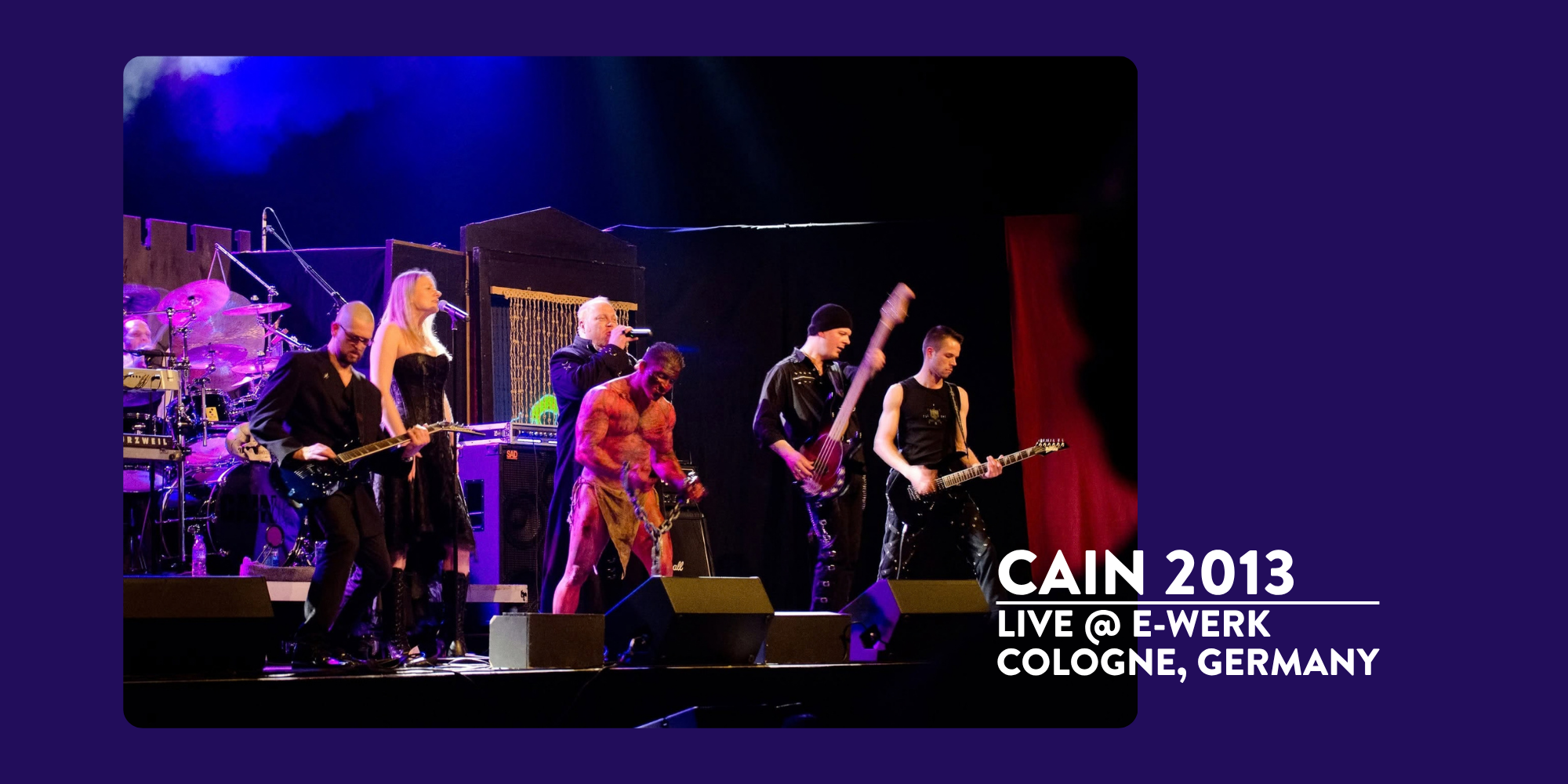
CAIN live at E-Werk Cologne, Germany, 14.03.2013